• Skip to primary navigation
  • Skip to main content
BerkshieLinks stands with Andris

BerkshireLinks.com

  • Tanglewood reviews
  • Tanglewood schedule
  • The Berkshires
  • Contact

Dave Read

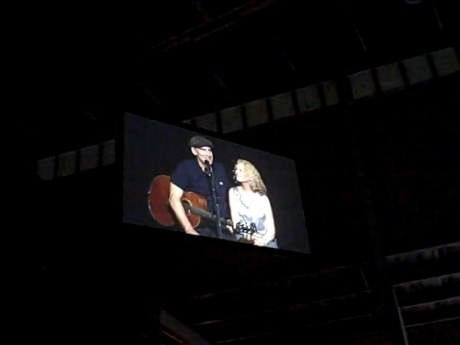
James Taylor and Carole King concert Tanglewood scenes

James Taylor and Carole King concert Tanglewood

Article by Dave Read.

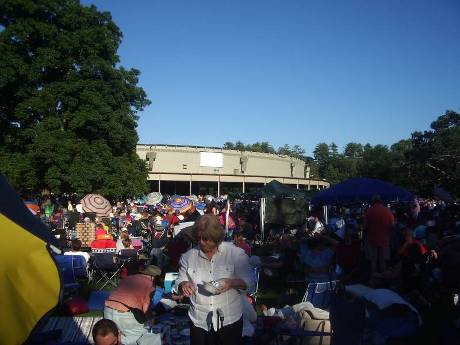
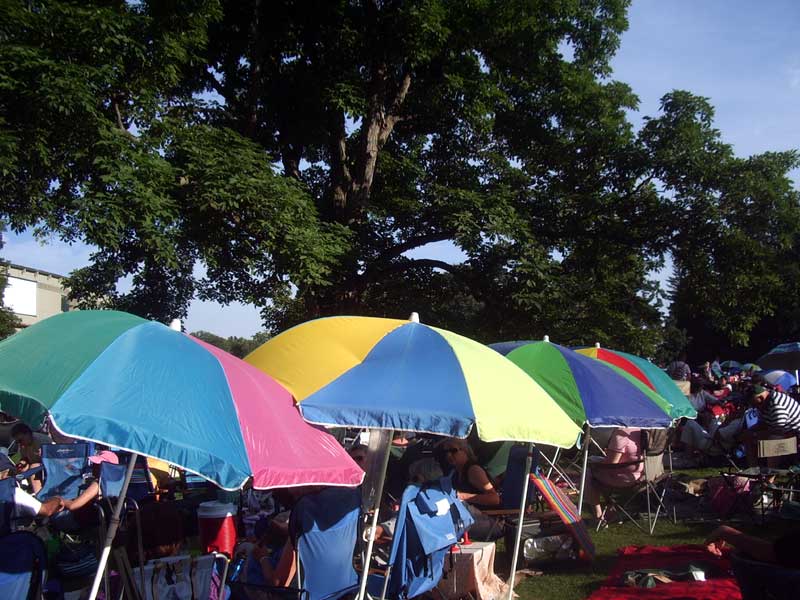
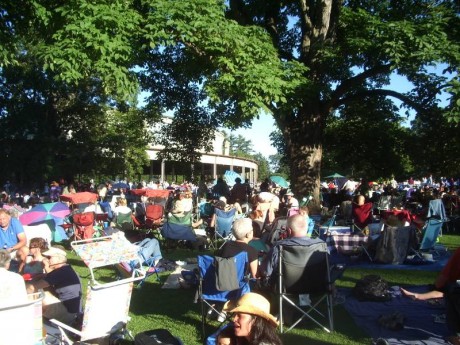
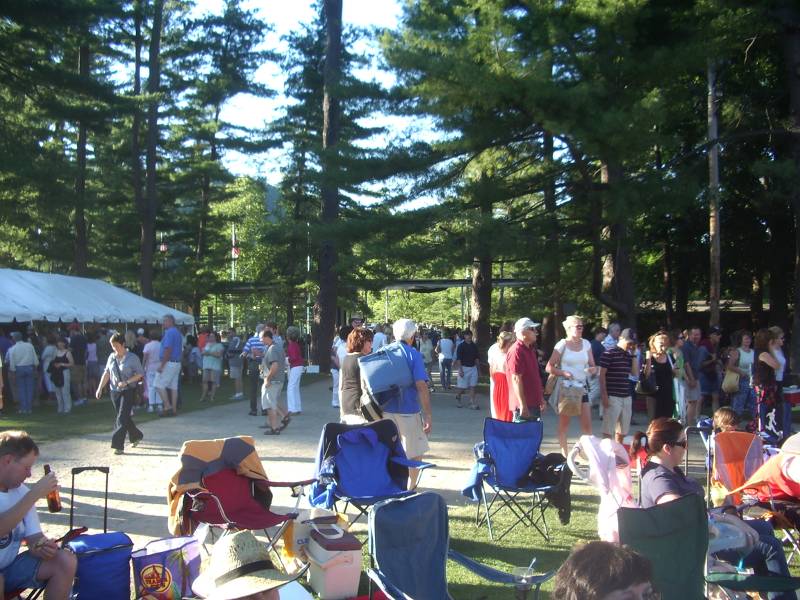
For the July 4, 2010 performance of the James Taylor and Carole King Troubador Reunion 2010 World Tour, we meandered among the audience on the lawn and alongside the Shed for this video and these photos. This was the middle of three consecutive days when audiences of 18,500 packed into the Koussevitsky Music Shed and sprawled accross the vast Tanglewood Lawn.

video and photos of James Taylor and Carole King at Tanglewood

James Taylor and Carole King - Tanglewood - July 5, 2010
James Taylor and Carole King concert, Tanglewood, July 2010
James Taylor and Carole King Troubador Reunion 2010 World Tour at Tanglewood
James Taylor and Carole King concert, Tanglewood, July 2010
Tanglewood scene during the James Taylor and Carole King Troubador Reunion 2010 World Tour, July 4, 2010
James Taylor and Carole King concert, Tanglewood, July 2010
Tanglewood lawnsters at the James Taylor and Carole King Troubador Reunion 2010 World Tour, July 3, 2010.
James Taylor and Carole King concert, Tanglewood, July 2010
Entering Tanglewood for the James Taylor and Carole King Troubador Reunion 2010 World Tour, July 3, 2010.
James Taylor and Carole King concert, Tanglewood, July 2010

James Taylor and Carole King Troubador Reunion 2010 World Tour at Tanglewood

July 3, 2010 report by Dave Conlin Read.

Entering Tanglewood for the James Taylor and Carole King Troubador Reunion 2010 World Tour, July 3, 2010.The three day Tanglewood segment of the Carole King & James Taylor Troubador Reunion 2010 World Tour got underway Saturday July 3, a quintessential sunny summer day that got all hot, bothering nobody, and then cooled nicely after dusk, easing the lawnsters’ transition from the gnosh to the canoodle.

This reunion includes the 3 sidemen from the Troubador, the Hollywood club where King and Taylor first performed together: guitarist Danny Kortchmar, the bassist Leland Sklar and Russ Kunkel on drums. Connecticut native Kortchmar and Taylor met on Martha’s Vineyard in the mid-60s, a friendship that led Taylor to London where the Beatles signed him in 1969 and then to L.A. in 1971.

With King and Taylor taking turns on stage recalling the moments when they first heard each other’s songs, one almost could sense the firing of billions of synapses among the audience of 18,500, as it embarked on a million mile trip down memory lane. Ms. King wondered aloud whether “this is what Koussevitsky had in mind?”
Tanglewood lawnsters at the James Taylor and Carole King Troubador Reunion 2010 World Tour, July 3, 2010.
Maybe not exactly; Koussevitsky being all about the learning, and this show being all about the remembering. But we can imagine the Maestro being mollified by this first-class show, the principals all having earned post-graduate honors from the University of the Sixties.

James Taylor and Carole King Troubador Reunion 2010 World Tour at Tanglewood – July 3, 2010 Set List

  • Something In The Way She Moves
  • So Far Away
  • Honey Don’t Leave L.A
  • Carolina In My Mind
  • Way Over Yonder
  • Smackwater Jack
  • Country Road
  • Sweet Seasons
  • Mexico
  • Song Of Long Ago
  • Long Ago And Far Away
  • Beautiful
  • Shower The People
  • (You Make Me Feel Like) A Natural Woman
  • INTERMISSION
  • Been To Canaan
  • Crying In The Rain
  • Copperline
  • Sweet Baby James
  • Jazzman
  • Will You Love Me Tomorrow
  • Your Smiling Face
  • It’s Too Late
  • Fire and Rain
  • I Feel The Earth Move
  • You’ve Got A Friend
  • ENCORE
  • Up On The Roof
  • How Sweet It Is
  • You Can Close Your Eyes

You may be interested to know that it was 2 years ago that Ms. King was a surprise guest at Mr. Taylor’s 60th birthday party in the Koussevitsky Music Shed.

A Funny Thing Happened on the Way to the Forum at WTF

July 1, 2010 performance reviewed by Frances Benn Hall.

A Funny Thing Happened on the Way to the Forum at WTF - Christopher Fitzgerald, Photo by T. Charles EricksonA Funny Thing Happened on the Way to the Forum is now bringing down the house at the Williamstown Theatre Festival’s hilarious, outrageous, and joyful staging of the Steven Sondheim musical. The ever twisting plot concerns the machinations of a wily slave Pseudolus (Christopher Fitzgerald) who to win freedom agrees to entice a young virgin from the next door brothel, imprisoned awaiting the sea captain to whom she has been promised, to instead end up, still virginal, in the arms of his master’s love-smitten son Hero (Bryce Pinkham) a willing accomplice, but a naïve wooer.

With his master, Senex (Jeremy Shamos) away, only to return unexpectedly and pant after the virgin himself Pseudolus is reluctantly aided by the head slave, Hysterium. In this zany plot, what is even more amazing is that the straight women’s roles are played so convincingly and so straight that they could be females in the roles. The virgin Phylia (David Turner) is so restrained in movement, so innocently aware and accepting of her supposed destiny that, especially in her song Lovely, becomes just that. And the mother of Hero, Domina (Chivas Michael), looking for her errant husband is a masterpiece of a male actor so taking on the role that it is pure realist comedy, never camp.

A Funny Thing Happened on the Way to the Forum at WTF - Christopher Fitzgerald, Adam Lerman, Graham Rowat, Zackary Grady. Photo by Sam Hough.Graham Rowat as sea captain Miles Gloriosus, strides the stage manfully and dangerously. He is a couple of feet taller than most and easy to spot. Others swish in and out of secondary roles with agility and conviction. And all convey the sense of having as glorious a time as the ever-applauding audience is having. Sondheim’s musical style, chosen for the pitter-patter of the dialog, was zestfully rendered. Many of the songs, such as Comedy Tonight and Everybody Ought to Have a Maid, have become woven into the fabric of American music and are always a delight to hear again.

Director Jessica Stone has served her cast well, and Williamstown Theatre Festival has rewarded her with a magnificent stage setting in which to mount her miracle. The front curtain is etched with a rough sketch of decayed ancient Rome, huge arches, tall columns, all half there, all crumbling. But as the on-stage orchestra (skillfully in a pit that is navigated by actors and dancers and at times incorporated into the play itself) opens the play, the curtain does not rise but the ruined columns, the chipped towers, the half-arching arches get filled in by an invisible hand until Rome is complete again. Then the curtain can rise and the play begin.

And it does with a lifting of a second curtain. Then we see the great farce set. Three Roman mansions, each with a second story and windows, and even a roof on which an actor can emergy. Instead of the three “doors” necessary to a farce, this set has triple that. Actors climb columns agilely; virgins come out doors to enter other doors and reappear on a roof as the play speeds along in and out of the three great Roman buildings, each painted in a different glowing major color and all conveniently near to each other.

The opening night audience went absolutely wild at the play. Each song was clapped and cheered, and the final standing ovation went on a long time. A short review cannot begin to describe the glories of this production and the response of the audience to them. Early press releases that explained the casting decisions and defended their effectiveness and necessity, turned out to be accurate. The play could be hysterically funny without resorting to female impersonation for laughs only. An all male cast could convincingly produce this farce. Shakespeare knew this, of course, and never let himself be hampered by it.

To recapulate. The show is held together by the resourceful Pseudolus who is scrappy, crafty and a man who never gives up. He is abetted by the reluctant Hysterium, who is an up-tight character until he must, to save the plot, throw himself with vigor into the role of dead-virgin. Hero is delightfully naïve, Phylia obedient and docile and appealing. Hero’s father is delightfully smitten with the virgin and active in his pursuit of her. David Constable is a swaggering pimp. A wonderful cast!

And last note on Plautus, whose ancient Roman farces inspired A Funny Thing Happened on the Way to the Forum. He was a nobody. But he had a good mind, and some how a good education in the sense of knowing Greek and Roman farce plots he could borrow from. He walked the streets with his mill, grinding corn, he played bits in minor shows. Then he decided to be an author himself and just as his servant in this play win his freedom. He wins his own freedom—success and the reward was Roman citizenship, which granted the right to give himself a three part name, so he chose a funny one: Titus Maccus Plautus, meaning “splayfoot clown.” Theatre history books honor his tremendous output and his popularity has resulted in more of his manuscripts being preserved than those of any other Roman dramatist.

Plautus plots at times help end a tangled mismash at the end of a Shakespeare play such as Twelfth Night with its reconciling of lost children and parents making way for harmony for all. As for the Plautus masterpiece now being given such a grand performance at the Williamstown Festival. Go!

2010 Williamstown Theatre Festival schedule.

Les Ballet Jazz de Montréal at Jacob’s Pillow

Les Ballet Jazz de Montréal at Jacob’s Pillow

June 30, 2010 performance reviewed by Jocelyn McGrath.

Jacob's Pillow 2010 season - Céline Cassone and Nathan Madden of Les Ballets Jazz de Montréal; photo Christopher DugganTo the average dance layperson, “ballet jazz” may sound like an oxymoron, two diametrically opposed movement languages derived from wildly different culture bases. For Les Ballet Jazz de Montréal, a company born of a specific time and place (circa 1972 Quebec), the genre of ballet jazz addresses a vital modern dilemma—how to take what we receive artistically from the Past and make it relevant to the Now. The creation of ballet jazz was one solution to this challenge, and this synthesis of forms has evolved over two generations in this vibrant company. 2014 Jacob’s Pillow schedule, Contact info. and links

Artistic Director Lois Robitaille has made a priority of engaging up and coming choreographers to work with his company in a regular series of creative residencies. The pieces on this program represent the culmination of two such workshops with the choreographers Aszure Barton and Annabelle Lopez Ochoa.

The mission of this company is to uplift and to inspire, to connect to audiences in a range of human emotion through accessible dance. Ballet is the foundation for this company’s superstrong technical abilities. The ballet is then combined with the traits we associate with jazz—syncopation, isolations, theatricality, sexiness, and also with the strengths of these dancers—speed, easy athleticism, rhythmic prowess and sensuality. The result for the audience is a torrent of vicarious feeling.

Jacob's Pillow 2010 season - Céline Cassone and Nathan Madden of Les Ballets Jazz de Montréal; photo Christopher DugganAll these marvelous qualities are present in Barton’s piece Les Chambre Des Jacques (2006). Charmingly earthy, poignant moments unfold in a strange emotional logic; wild, spasming possession is contrasted with masterly, sensuous control. A forward undulation toward a potential partner initiates a peeling back motion, the electrifyingly narrow space between the bodies shifting upward. The ladies are archetypally dressed in short, ruffled, white dresses and red-toned corsets while the men, with the exception of one jacket, are dressed in the earth tones of day laborers.

The eclectic musical selections – Alberto Inglesias, Les Yeux Noirs, Gilles Vigneault, Antonio Vivaldi – are deftly arranged, the texture and tonality of the Yiddish and Gipsy music somehow finding an emotional resonance with the soaring classical arias. Each new transition from song to song is like walking through a door into another room in a rambling and elaborately decorated house—all connected, the choices intriguing in themselves.

Ochoa’s half of the itinerary, Locked Up Laura (2008), created specifically for Les Ballet Jazz de Montreal and Zip Zap Zoom (2009), have strong conceptual frameworks. In the duet Locked Up Laura, a female dancer lies on the floor until prodded into action by her partner, a combination boss/assistant/puppeteer. An example of extreme, sinuous pointework, the line between virtuosic technique and mechanical motion, is crossed and recrossed. This piece explores the dynamics between moving for oneself and being moved, and the nature of artistic autonomy in a relational art with unceasing demands.

Online gaming is the theme of the second piece, and a large three-dimensional moving backdrop becomes another presence on stage. We observe the stages of a game: the selection of the avatar; the interactions of the avatars in a series of duets; a humorous Simon’s Says type of dance-off competition; a fantastical trio in which the woman is partnered by two men in such a way that it seems like she is flying – eventually leading to a final crashing-through of real life with “real” dancing at the very end.

“Real” is an operative word for Les Ballet Jazz de Montreal. In describing Aszure Barton’s collaborative choreographic process, Robitaille said that her intent was to find “real life” in the strong personalities and quirks of the dancers. Robitaille thinks that we have just come through a period of time in the dance world where the chorographer took precedence over the dancer. He believes that the time has come again to put the dancer first.

The show runs two hours with one fifteen minute intermission.

2010 Jacob’s Pillow schedule and tickets.

You may be interested in: Review of Nina Ananiashvili, State Ballet of Georgia at Jacob’s Pillow.

The Last Five Years at Berkshire Theatre Festival

June 26, 2010 performance reviewed by Frances Benn Hall.

Julie Reiber as Cathy and Paul Anthony Stewart as Jamie in Berkshire Theatre Festival's 2010 Main Stage Production of The Last Five Years by Jason Robert Brown. Directed by Anders Cato. Photo courtesy of Berkshire Theatre Festival.Almost a hundred years ago, Ezra Pound (whose personal and political life took on disastrous turns later) had profound influence on the creative arts by blasting the message: MAKE IT NEW. Which is exactly what writer/composer Jason Robert Brown has done in ingeniously shaping his haunting musical, The Last Five Years, now playing gloriously at the Berkshire Theatre Festival where Ezra’s “make it new” vibes pulse in every aspect of the musical and its production.

The musical is mesmerizing and dynamic, sad and hilarious, accessible yet fractured in the telling of its love story, with sad ending of two young people Jamie, (Paul Anthony Stewart) a budding but untried author and Cathy (Julie Reiber) an aspiring actress.

On a plot level, they fall in love, marry, and after five years, part . On a performance level is it far more. Under the sensitive and impeccable direction of Andres Cato, the story unfolds, as composed, with songs alternating, those of Cathy sadly beginning at the end and working backward, while those of Jamie begin and move forward.

To further interweave the pattern, although the songs are alternating solos, moving gradually toward each other, from the beginning not only are both actors on stage, but the stage itself is a room from which there is no exit. From the start of the play the five piece orchestra, with grand piano up R and four piece band UL are on stage as are the two actors. Each can move about the space, live his/her own joy or grief in song but never distracting from or responding to the words of the other singing.

This pattern of backward/forward movement of plot material leads in the middle of the play to the one moment in the play when the two time frames briefly coincide and the two meet center stage, to exchange rings, to marry, to hope.

But the relentless press of time itself lets Jamie gradually realize that his success (he gets his book published successfully) does not help the marriage, and that he is unable to keep the faltered marriage alive.

And Cathy,having realized little dramatic fame, and having found it impossible to cope with yearnings for a baby and being a successful artist, can find little hope in a dreary summer part in an impossibly awful summer stock company in Ohio. She is on a downward slope from hopes she had when she fell in love, yet even still she fights to encourage herself, to go on. Knowing it is too late.

Both still love each other. But it can no longer work.

So, when they both reach the five year end time period, Jamie admit must admit that as much as he has loved her, and while he loves her still, “I could never rescue you,” she knows it too. It was in her first sad song. So they part, both grieved by the failure. And the audience is moved to tears.

Jamie, based admittedly on his creator, has the most dynamic and physically active songs. His opening number engages the audience immediately with its vitality as he, young Orthodox Jewish boy steeped in tradition, begins his elation at finding out that he is madly in love with a goyishe whom he soon idolizes as “Shiska Goddess”, and who will inspire him in his longing to become a famous author. His young boyish character develops gradually through the play and he finally reaches the heart-wrenching decision:
“I could never rescue you.”

Cathy knows too. She has quietly let us know the same thing in her first song…and in her second “Still hurting” she tries to deal with her hurt with hopes of moving on in her career. “Still climb up hill.” But until the bitter end, she hopes. Her role is less “showy” but as equally nuanced as his.

And both handle the moods and shifting rhythms of the music admirably.

Designer Lee Savage has created a beautiful set—a trap enclosing time and space but lit by six great windows through which the actors can gaze in hope or despair. Jeff Davis’ lighting is subtle and effective.

Pianist Rich Bertone at the great lonely piano leapt agilely from mood to mood and tempo to tempo of the score. He was ably supported by his fine four piece onstage orchestra. Indeed, they all so flowed into the time/timelessness of the performance, one did not observe them.

Weaving this production together was director Cato. It is an unusual evening in theatre and distinctly worth experiencing.

Berkshire Theatre Festival 2010 schedule and ticket information.

Nina Ananiashvili, State Ballet of Georgia at Jacob’s Pillow

Nina Ananiashvili, State Ballet of Georgia at Jacob’s Pillow

June 23, 2010 performance reviewed by Jocelyn McGrath.

Nina Ananiashvili, State Ballet of Georgia, in Bizet Variations; photo Kristi PitschNina Ananshvili has worked practically every day of her life to make ballet look effortless and feel joyful—an extraordinary passion that she continues to share with her company, the State Ballet of Georgia, and on the stage here at Jacob’s Pillow. Ms. Ananshvili is a prima ballerina among primas—an internationally acclaimed dancer who, among many prizes, honors and guest artist appearances, has been a principal for both the Bolshoi and the American Ballet Theatre. 2014 Jacob’s Pillow schedule, Contact info. and links

For the last six years she has added what could be called the most demanding role of her career, that of Artistic Director of the Georgian State Ballet, the country of her birth. She described for us the way in which she was asked to assume the position—summoned by the President of Georgia, he gave her four hours to “decide” to say yes before he planned to go public with her acceptance.

Clearly, he was a wise man, as Ms. Ananshvili has proved to be an innovator committed to expanding repertory and creating international partnerships. She has been determined to add the great 20th century ballet choreographers to the 19th century classics, and this evening’s collection of small works is the fruit of her labors.

The first section of the evening consists of four pieces, three male-female duets and a solo, by Frederick Ashton, created between 1952 to 1985. The solo, La Chatte, provided a humorous contrast to the generally romantic theme. In this piece the ballerina is a precious, white, fluffy pussycat, an interesting change from the more prevalent bird motifs. It’s lovely and refreshing to see an elegant ballerina sensuously rolling around on the floor. For the rest of the Ashton pas de deux, one would think that two dancers would have no trouble fitting on such a modest stage, but Ashton’s sense of the grandeur and spectacle suggest they were designed for much larger venues. Ashton’s ideal still conforms to the romantic vision of woman on a pedestal—resulting in many statuesque lifts, the most strikingly totemic nearing the end of Thais Pas de Deux (1971).

In comparison, the next piece by Balanchine, Duo Concertant (1972), seems easy and intelligent, the partnering naturally intimate and mutual. Delicate, nuanced phrasing; rhythmic, low, passages are all enhanced by a human-sized sense of relationship that is rooted in the music by Stravinsky. The live pianist and violinist on stage, Jeanette Fang and David Southorn, respectively, delineate a home base, literally and figuratively. The initial tableau is that of the two dancers standing musingly behind the piano, listening attentively. It presents a respectful and affectionate family portrait we return to again and again.

Alexei Ratmansky’s Bizet Variations Pas de Six was choreographed in 2008 specifically for this company. After four pas de deux and a solo, this piece with three couples feels wildly expansive and dynamic. Lush, flowing costumes in a palette of cool blues and lavender for the ladies, and Romeo blouses and fitted pantaloons on the men, enhance the pleasure of pure movement. That the women are adored by their men is evident (at one point the men literally kiss the women’s feet), but that the dance itself is the highest love is very clear.

The last piece, Falling Angels (1989) by Jiri Kylian, presents the strongest contrast to the rest of the program. It contains hardly any obvious ballet vocabulary—the drum score and stark, structured lighting; the angular gestures and contracting spines, say Modern all over. Yet, the emphasis on extreme synchronized movement, and the subtle variations by individuals in the group, eventually breaking off to dance duets and solos, draws on the tradition of the corps. Literally forming one body together, this group of eight women exhibit a virtuosic unity that supports and contrasts the ever-changing individuals.

As a complete evening of entertainment, this performance is an exceptional sampler of some of the greatest modern ballet choreographers. Here is a marvelous opportunity to explore the range of artistry directly influenced by the great classics, freed from a three-act storyline. Romantic and passionate, subtle and nuanced, there is so much here to enjoy.

This show runs two hours with two 10-minute intermissions.

  • « Go to Previous Page
  • Page 1
  • Interim pages omitted …
  • Page 53
  • Page 54
  • Page 55
  • Page 56
  • Page 57
  • Interim pages omitted …
  • Page 80
  • Go to Next Page »

Copyright © 2026 · RWCtwos on Genesis Framework · WordPress · Log in

  • Tanglewood reviews
  • Tanglewood schedule
  • The Berkshires
  • Contact