• Skip to primary navigation
  • Skip to main content
BerkshieLinks stands with Andris

BerkshireLinks.com

  • Tanglewood Schedule
  • Tanglewood reviews
  • The Berkshires
  • Contact

Tanglewood concert reviews

Andris Nelsons leads BSO program of Hayden, Shostakovich, Beethoven, July 19, 2026

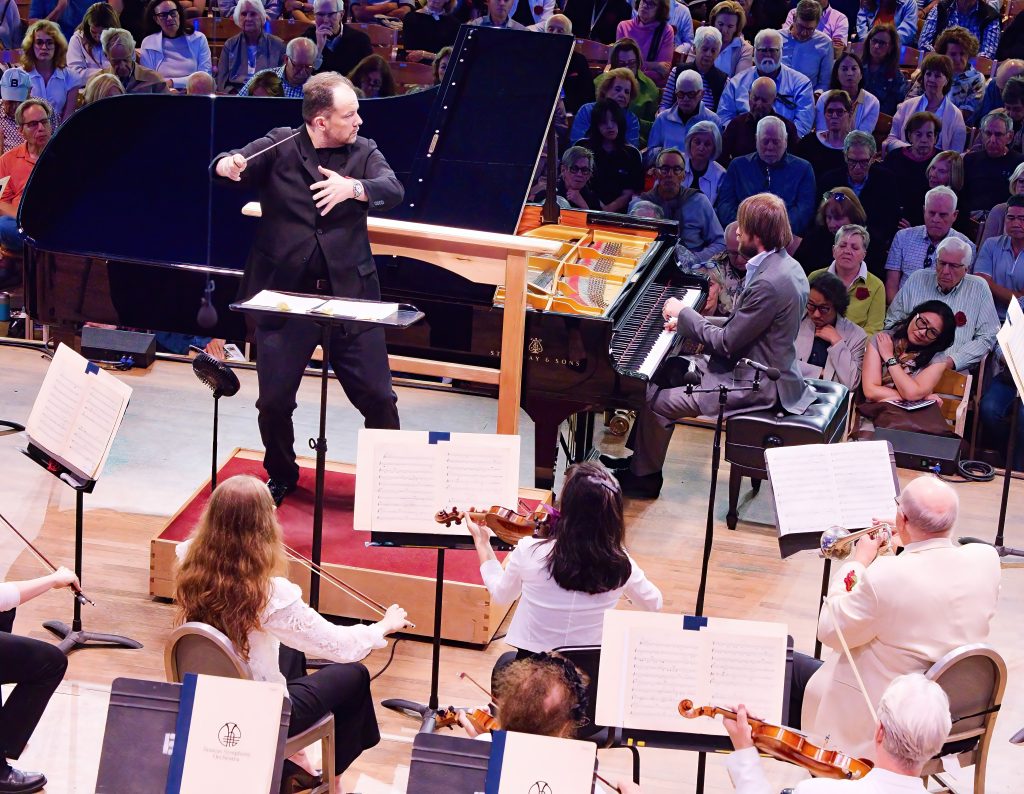
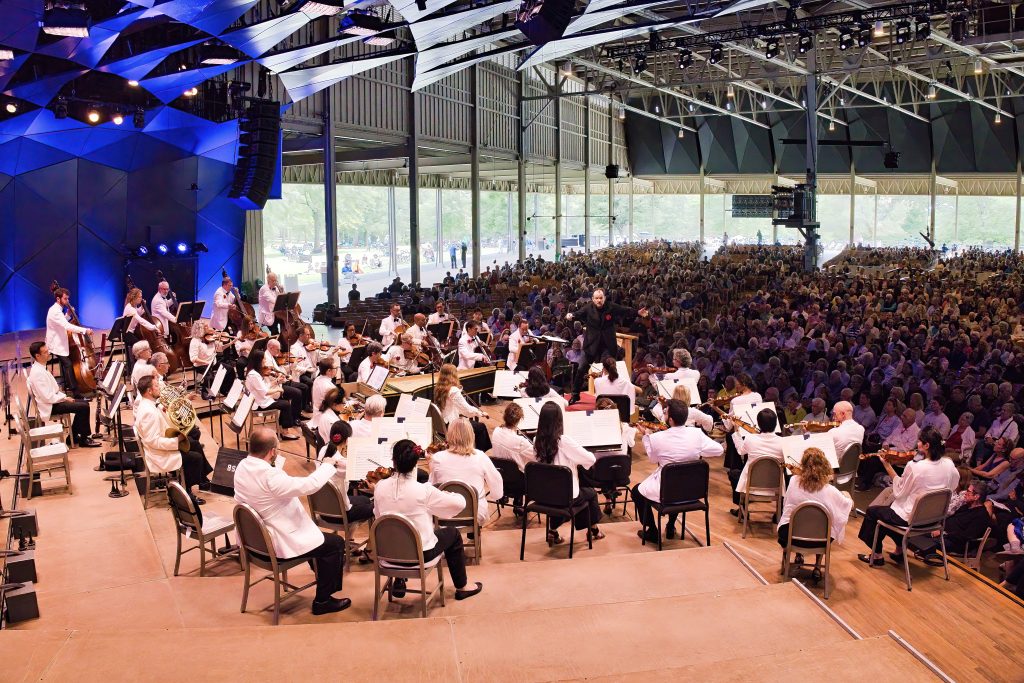
By Dave Read, July 19, 2026 performance – Today’s matinee concert in the Koussevitzky Music Shed at Tanglewood by the Boston Symphony Orchestra, music director Andris Nelsons conducting, was the epitome of what a concert should be; the appearance of rose boutonnieres on stage and throughout the audience a reminder of the divided society we inhabit.
Nelsons leads BSO program of Hayden, Shostakovich, Beethoven, July 19, 2026

The concert opened with Symphony No. 22 in E flat, The Philosopher, composed in 1764 by Franz Jopseph Hayden, and only played once before by the BSO, fifty years ago, at Tanglewood. With only one other performance in the orchestra’s 145 year history, this is an example the programming philosophy that resulted in the Stand with Andris movement, symbolized by the red rose. Musicians such as Maestro Nelsons work in service to the Muse, not to the diverse communities that buy concert tickets. That is the misalignment that precipitated the fraught tempest in the BSO’s teapot.

Out of alignment are the Trustees, whose mission is to serve the muse-devoted artists of the orchestra, not Mammon, already well-served by the Boston Pops, as well as by the whole gamut of pop music. You can serve Mammon or you can serve the Muse, but you cannot do both things at once.
Nelsons leads BSO program of Hayden, Shostakovich, Beethoven, July 19, 2026

Maestro Nelsons is a compelling visual presence; his movements on the podium make it seem as if the score uncoils from him during the performance. The first thing we noticed during his initial Tanglewood performances 13 years ago was how often he reached back to the podium during performances. He was setting roots in the Shed, but not deep enough, it seems, to withstand uprooting by the bean counters in Boston.

The interplay between two virtuosos, pianist Danill Trifonov and BSO trumpeter Thomas Rolfs made the Shostokovich concerto especially entertaining. That such disparate objects as the piano and the trumpet can so contrast and compliment one another lays at the innate joy of symphonic music.

To conclude the program with Beethoven’s life-affirming second symphony, as may have been said before, is procisely why places like Tanglewood exist.

The Boston Camerata at Ozawa Hall, Tanglewood, July 16, 2026

By Dave Read, July 16, 2026 performance – The augmented Boston Camarata performed a program called, FREE AMERICA, Songs of Resistance and Rebellion for a sparse audience at Ozawa Hall, on the Tanglewood campus in the Berkshires. Led by France native Anne Azema and assisted by three fifers and a drummer, the ensemble delivered a beautifully arrayed survey of the songs and sounds of the American revolution.

The Boston Camerata at Ozawa Hall, Tanglewood, July 16, 2026; Hilary Scott/BSO photo.

The Boston Camerata was founded at Boston’s Museum of Fine Arts, during the apparent peace and quiet of 1954, when the new field of early music was emerging here and across Europe. Tonight’s performance was no staid museum piece, however, but a spirited re-animation of a varied and turbulent period.

The Boston Camerata at Ozawa Hall, Tanglewood, July 16, 2026; Hilary Scott/BSO photo.

The audience were invited several times to sing along and acquitted itself well. Early in the program, which Ms. Azema said was arranged into chapters, was Yankee Doodle, or the Lexington March. Perhaps the most affecting number was Didn’t My Lord Deliver Daniel, sung by bass baritone Philip Bullock, whose forceful performance temporarily transformed staid Ozawa Hall into a zealous temple.

Especially notable tonight also is drummer Kyle Forsthoff, who delighted the audience with a couple of turns on bones and spoons, which must be considered the most democratic of all instruments, (even if they are not easy to play well).

Tonight’s repertoire has roots as diverse as the nation they celebrate, ranging from the Hebrew Bible, Scottish taverns, slave quarters, and Shaker colonies. They comprise the first volume of American folk music, even if the music industry has mismanaged our national legacy, which is why such institutions as the Boston Camerata and the Tanglewood Music Center are so important.

Trombone Shorty and Ziggy Marley at Tanglewood, July 14, 2026

By Dave Read, July 14, 2026 performance – Trombone Shorty and Ziggy Marley took possession of the Koussevitsky Music Shed at Tanglewood tonight, the venue so recently under the dominion of Mozart, Mahler, Brahms, et al. And so we’re reminded of the alchemy that makes music serve both Mammon and the Muse, as either popular or classical art.

Trombone Shorty at Tanglewood, July 14, 2026; Hilary Scott/BSO photo.

Whereas seduction is an essential element of most music, with listeners invited into realms of contrasting themes and rhythms, pop music often dispenses with the formalities and commands your attention from the downbeat. Trombone Shorty hits the ground running, a hip hop or funky rhythm throbbing aggressively. Dozens of trombone, trumpet, sax solos, and a few guitar runs comprise the show. It purely performative, a demonstration of amplification without ever feeling like an exchange between artist and audience – despite the twenty or so times Mr. Shorty dropped Tanglewood into his stream of verbiage or lyric.

Trombone Shorty at Tanglewood, July 14, 2026; Hilary Scott/BSO photo.

It was fun but could have been so much more. These are highly skilled musicians but the performance overwhelmed their artistry with maximum volume devoted to a minimum of subtlety or variety.

Ziggy Marley dialed it back to a noticeable degree but didn’t take to the stage until thirty minutes after Trombone Shorty’s ninety minute set. That makes for too long a night – it’s sub-optimal to prepare for an evening of rhythmically fluid reggae music with an hour and a half of hip hop and neo-funk. Each headliner is a gifted musician and generous entertainer but something is lost, not added, when they are presented is succession.

Wouldn’t it be more fun to have Trombone Shorty headline a bill that opens with one or two jazz-centric emerging artists and on another date, present Ziggy Marley atop a bill that includes emerging artists of his ilk?

Fabio Luisi conducts Eric Lu and the BSO at Tanglewood, July 12, 2026

By Dave Read, July 12, 2026 performance – Guest conductor Fabio Luisi led pianist Eric Lu and the Boston Symphony Orchestra in a Tanglewood matinee program of Chopin’s Piano Concerto No, 2 in F minor and Brahms’s Symphony No. 2 in D. Maestro Luisi’s principle job is music director of the Dallas Symphony

Fabio Luisi conducts the BSO at Tanglewood, July 12, 2026; Hilary Scott/BSO photo.

The program opened with a ten minute composition titled What do flowers do at night? by Sophia Jani, preceded by a little talk by Ms. Jani. It seems to me that the moment before a musical performance is best used to quiet ourselves, by escaping the verbose mind and embracing the sensuous mind. That trip from one side of the mind to the other can be arduous and time-consuming! I can listen to a composition, and I can listen to a talk about a composition, but I cannot do both at once. The time to explain a work of art is after it has been heard or seen, not before.

Winner of the first prize at the 2025 Chopin Piano competition in Prague, Mr. Lu gave an exciting and beautiful reading of Chopin’s concerto, in his Tanglewood debut. The ostensible imbalance between soloist and orchestra always makes it especially fun to listen closely and this afternoon I was rewarded when it seemed as if the string sections grew out of Mr. Lu’s left and right hands, so subtle were the segues between soloist and orchestra. After a rousing ovation, Mr. Lu returned to the piano and played an encore, Kinderszenen, Op. 15 No. 7: Träumerei, by Robert Schuman.

Following intermission, Maestro Luisi and the orchestra gave an elegant reading of the Brahms symphony, added to the long history of idyllic Berkshires afternoons at Tanglewood.

Nelsons conducts Ax, Morley and BSO at Tanglewood, July 11, 2026

By Dave Read, July 11, 2026 performance – Maestro Andris Nelson led the Boston Symphony Orchestra and a pair of acclaimed soloists in a program of Mozart and Mahler to the delight of a large audience at Tanglewood.

Andris Nelsons conducts Emanuel Ax and BSO at Tanglewood; Hilary Scott/BSO photo.

Tonight’s program opened with Berkshires resident and global music citizen Emanuel Ax playing Mozart’s Piano concerto no. 25 in C, K.503. As program annotator Michael Sternberg notes, “This is one of Mozart’s big trumpets-and-drums concertos…,” which means it was easier than usual for me to pay attention and keep from wandering off the musical path. Once big orchestral sounds set us afoot, there’s no better guide through vast symphonia than the piano, which Mr. Ax has long since mastered.

After intermission, Mahler’s Symphony No. 4 in G, with soprano Erin Morley as soloist, was a perfect compliment to the piano concerto. The composer’s intentions for the symphony were out of sync with the audience’s response. Over time, audiences have caught up to Mahler’s vision. We mortals are well-represented by Ms. Morley’s sublime soprano, which this symphony finally locates in heaven!

Throughout the long national nightmare since Ford’s pardon of Nixon, Tanglewood has been a place of refuge, because music offers an escape from the gravity of populism. We, the people are served by music when musicians are free to serve their muse. Composers such as Mozart and Mahler were served by aristocratic patrons of the arts who left artistic alignment in the hands of artists. If the organization created to serve the orchestra thinks the orchestra is meant to serve the myriad cohorts collectively known as Boston, then it has lost its way.

Clearly, Maestro Nelsons and the myriad of musicians tuned tonight to his baton, are in perfect alignment.

World premiere of Lincoln Symphony by Philip Glass at Tanglewood, July 5, 2026

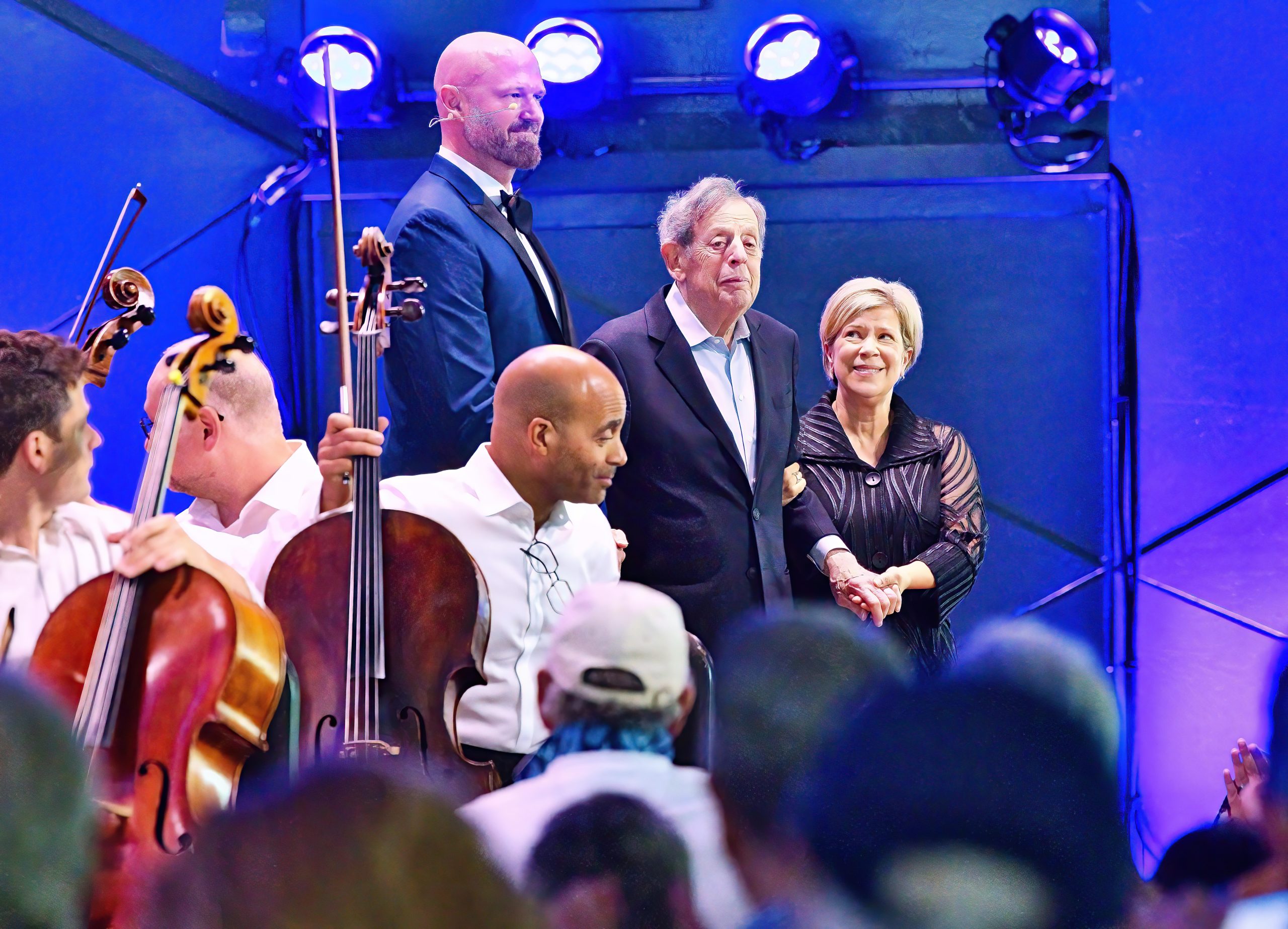
By Dave Read, July 5, 2026 performance – Symphony No. 15, Lincoln, composed by Philip Glass was given its world premiere by the Boston Symphony Orchestra at Tanglewood, heading a program that continued with John Williams‘ suite from the film Lincoln, and concluded with Aaron Copland’s Lincoln Portrait. Mr. Glass was given a rousing welcome by the large audience when he was brought on stage by conductor Karen Kamensek.

Philip Glass, Zachary James, and Karen Kamensek; Hilary Scott/BSO photo.

The program was harmonious and cumulative with its discrete components combining in one grand conclusion, rather than a trio of finales. Such is the result when great musicians devote their genius to the same beloved national martyr, as if their personal muses had united (across the decades). Mr. Glass aptly wove text and music in his composition, and baritone Zachary James added a rich resonance to the score.

Mr. Glass tells us in the notes for today’s program that this is his fourth composition centered on Abraham Lincoln, dating to the early 1980s. With a commission from the Hearthland Foundation, Symphony No. 15 was composed between 2021 and 2023, because Lincoln is “…an appropriate subject to consider on this, our country’s 250th birthday.”

“Opera is a species of theatre, not a place for a history lesson. When writing a symphony, we are talking about a relationship made even more abstract.”

The sensuous flow of music and lyric are interrupted by the digital crawl projected on the big device suspended over the orchestra. It awakens the text-centric intellect, which people hope to escape during a concert. Lose the crawl and let the music do the talking!

  • « Go to Previous Page
  • Page 1
  • Page 2
  • Page 3
  • Page 4
  • Page 5
  • Interim pages omitted …
  • Page 40
  • Go to Next Page »

Copyright © 2026 · RWCtwos on Genesis Framework · WordPress · Log in

  • Tanglewood Schedule
  • Tanglewood reviews
  • The Berkshires
  • Contact